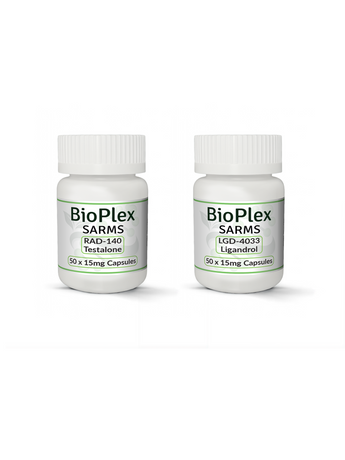


RAD-140 + LGD-4033
Impossible de charger la disponibilité du service de retrait
RAD-140 (Testolone) + LGD-4033 (Ligandrol) | SARMs Research UK
Muscle Formation Research Set
The BioPlex Muscle Formation Research Set combines RAD-140 (Testolone) 50×15mg and LGD-4033 (Ligandrol) 50×15mg, two non-steroidal selective androgen receptor modulators studied for their interactions with androgen-receptor signalling and associated tissue-response pathways. The set contains one pot of each research compound, creating a structured pairing for comparative laboratory investigation of two recognised SARMs with related primary molecular targets but distinct chemical characteristics and research histories.
RAD-140 and LGD-4033 both interact principally with the androgen receptor, but they should not be regarded as interchangeable compounds. Each has a different molecular structure, pharmacological profile and evidence base. RAD-140 has attracted research interest through receptor-binding studies, preclinical investigations of tissue-selective activity and subsequent specialised clinical research. LGD-4033 has been examined through controlled research involving pharmacokinetics, hormone-related variables, body composition and lean-tissue endpoints.
These differences make the combination particularly interesting from a comparative research perspective. Rather than examining a single androgen-receptor modulator in isolation, researchers can consider how two structurally different ligands targeting the same receptor system may produce different experimental observations depending on exposure, receptor expression, cellular environment and the endpoints selected for measurement.
The Muscle Formation Research Set name describes the principal scientific theme surrounding this pairing rather than guaranteeing a particular experimental result. Findings involving androgen-receptor modulators can vary considerably according to model selection, concentration, exposure duration, tissue type and methodology.
By presenting RAD-140 and LGD-4033 together while retaining their individual identities, BioPlex provides a convenient research format for investigating similarities and differences between two recognised selective androgen receptor modulators. Both compounds are supplied as separately identified 50×15mg capsule products intended strictly for laboratory, analytical and educational research.
How RAD-140 and LGD-4033 Work Together
RAD-140 (Testolone) and LGD-4033 (Ligandrol) share the androgen receptor as their principal molecular target. The androgen receptor is a ligand-activated nuclear receptor involved in regulating androgen-responsive gene transcription. When an appropriate ligand binds to this receptor, the resulting receptor complex can undergo conformational changes, interact with cellular regulatory proteins and influence transcriptional activity within the experimental system being studied.
The research interest in placing RAD-140 and LGD-4033 within the same set therefore comes from examining two chemically distinct ligands operating through the same broad receptor pathway. Sharing a primary target does not mean the compounds are identical. Differences in molecular structure, receptor interaction, pharmacokinetics, metabolism, tissue exposure and interactions with cellular co-regulators can all contribute to different experimental profiles.
RAD-140 has extensive discovery-stage and preclinical characterisation involving androgen-receptor activity and tissue-selective responses. LGD-4033 has a different evidence profile that includes controlled investigation of pharmacokinetics, endocrine markers and lean-body-mass endpoints. Examining these compounds within the same research theme allows receptor-level similarities to be considered alongside compound-specific experimental findings.
Within controlled laboratory research, this pairing may therefore provide a framework for investigating androgen-receptor activation, transcriptional responses, tissue-specific signalling and differences between compounds operating through related molecular mechanisms.
Importantly, grouping RAD-140 and LGD-4033 together does not establish that their experimental effects will automatically be additive or synergistic. Equal quantities also do not necessarily result in equivalent exposure, receptor occupancy or biological activity.
The scientific value of this combination lies in bringing two recognised SARMs together for comparative investigation while maintaining the distinction between their individual pharmacological characteristics. Appropriate controls, validated compound identity, defined experimental conditions and predetermined endpoints remain essential when interpreting findings involving either compound independently or within combined research.
RAD-140 (Testolone) 50×15mg
RAD-140, commonly known as Testolone and also investigated under development names including Vosilasarm, is a synthetic non-steroidal selective androgen receptor modulator. It was developed as part of research investigating whether androgen-receptor signalling could be selectively modulated while producing differentiated patterns of activity across androgen-responsive tissues.
Its principal molecular target is the androgen receptor. Following ligand binding, androgen-receptor signalling can influence transcription of androgen-responsive genes. The resulting experimental response, however, depends upon numerous variables including receptor expression, cellular environment, regulatory proteins, compound concentration, exposure duration and the particular biological model being investigated.
Early RAD-140 research included receptor assays and preclinical investigations examining tissue-selective anabolic-androgenic activity. These studies helped establish RAD-140 as an important experimental compound within selective androgen receptor modulator research and generated interest in its behaviour across muscle-associated, bone-associated and other androgen-responsive experimental models.
RAD-140 subsequently progressed beyond discovery-stage investigation. Clinical research has examined the compound, under the name Vosilasarm, within a specialised androgen-receptor-positive breast-cancer setting. This provides additional human pharmacology information but should not be extrapolated directly to unrelated research questions or treated as evidence for outcomes outside the conditions investigated.
More recent skeletal-muscle research has also demonstrated an important principle when interpreting RAD-140: a plausible receptor mechanism does not guarantee that every experimental model will produce an anticipated tissue response. Experimental design, biological conditions, exposure and selected endpoints remain critical.
Within the Muscle Formation Research Set, RAD-140 provides one side of a structured androgen-receptor comparison. Its distinct molecular structure, substantial preclinical research history and developing clinical evidence make it relevant for investigating how separate non-steroidal androgen-receptor ligands can share a primary molecular target while demonstrating different experimental characteristics.
LGD-4033 (Ligandrol) 50×15mg
LGD-4033, commonly known as Ligandrol and also identified by the development code VK5211, is a synthetic non-steroidal selective androgen receptor modulator developed for research into tissue-selective androgen-receptor activity. It has become one of the better-characterised compounds within the wider SARM research field because its evidence base extends from preclinical investigation into controlled human research.
Like RAD-140, LGD-4033 principally targets the androgen receptor. Binding can influence receptor conformation and downstream transcriptional regulation, although the resulting experimental response can vary according to receptor distribution, cellular characteristics, compound exposure, regulatory proteins and the specific endpoints selected for measurement.
LGD-4033 is particularly notable because published controlled research has examined its pharmacokinetic and biological characteristics. A placebo-controlled study investigated LGD-4033 over a 21-day period at several experimental dose levels and evaluated pharmacokinetics alongside safety observations, hormone-related variables, lipid markers, body composition and physical-performance endpoints.
The investigation reported dose-related changes in lean body mass while also documenting changes across other measured variables. These findings provide useful controlled evidence concerning LGD-4033 exposure and selected lean-tissue-related endpoints. However, the relatively short duration of the research does not establish long-term outcomes or answer every question surrounding androgen-receptor modulation.
This distinction becomes particularly useful when LGD-4033 is considered alongside RAD-140. Although both compounds belong to the same broad SARM category and interact with the androgen receptor, their molecular structures and research histories differ.
Within the Muscle Formation Research Set, LGD-4033 therefore provides a complementary research profile to RAD-140. Its controlled pharmacokinetic and lean-tissue research can be considered alongside RAD-140's extensive discovery and preclinical characterisation, providing a structured framework for comparative androgen-receptor investigation without assuming that the two compounds will behave identically across different laboratory models.
Explore Related Research Compounds
Continue exploring related androgen-receptor and SARMs-category research compounds from BioPlex.
View RAD-140 Testolone 50×15mg Research Capsules ⟶
View LGD-4033 Ligandrol 50×15mg Research Capsules ⟶
Explore All BioPlex SARMs Research Compounds ⟶
Explore BioPlex Research Information
Access BioPlex SARMs guidance, company information and the complete research product range.
Explore the BioPlex SARMs Research Range ⟶
Learn More About BioPlex Peptides ⟶
View All BioPlex Research Products ⟶
Explore Related Research Articles
Continue your research with BioPlex articles covering RAD-140, LGD-4033, androgen-receptor signalling and comparative SARMs research.
Read RAD-140 vs LGD-4033: Androgen-Receptor Research Compared ⟶
Read Best SARMs for Muscle Growth: RAD-140 vs LGD-4033 vs YK-11 ⟶
Explore All BioPlex SARMs Research Articles ⟶
Disclaimer

More Ways to Pay — Coming Soon...
Why Thousands Choose BioPlex Peptides..
BioPlex has built its reputation through consistency, transparency and a long term commitment to quality. With peptide sector experience dating back to 2012, we've grown into one of the UK's most trusted research suppliers by focusing on high quality research products, independent verification and customer confidence—not empty marketing claims!
Explore BioPlex Research Collections
Browse research peptides UK, peptide sets, amino acids, SARMs, reconstitution solutions and the complete BioPlex product range.


Top Selling Product of 2026-Klow 80mg
KLOW is an 80mg multi-peptide research blend combining GHK-Cu, BPC-157, TB-500 and KPV. It supports controlled laboratory investigation into cellular signalling, extracellular matrix regulation, peptide interactions, inflammatory markers and coordinated tissue-response pathways.


Klow Stack 80mg
Impossible de charger la disponibilité du service de retrait
Your Recently Viewed Products...
Take another look at recently viewed products and continue exploring the BioPlex range.
New Research Arrivals & Liquid Amino-Acid Blends


Latest Articles From BioPlex ...
Research insights, industry updates and practical guidance from BioPlex Peptides.


Discover Our Sister Store — LoveVella
From the BioPlex family, discover LoveVella, our online adult and lifestyle store with thousands of products for women, men and couples. BioPlex customers can enjoy 15% off their LoveVella order.
CODE: BIOPLEXCUSTOMER
View The Sister Store⟶