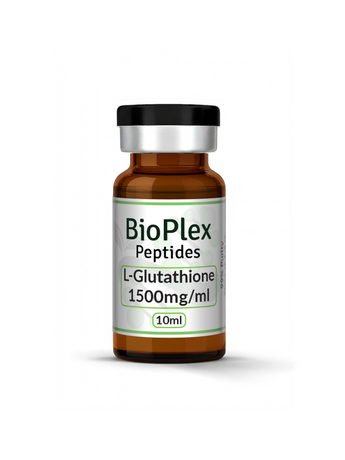


L-Glutathione 10ml 1500mg/ml
No se pudo cargar la disponibilidad de retiro
Premium Grade | UK Supply | Research Amino-Acid Compound | Worldwide Delivery
(Cellular Redox & Oxidative Pathway Research Compound)
Brief Summary
L-Glutathione is a high-strength liquid research compound developed for laboratory investigation into cellular redox balance, oxidative pathway activity, thiol-dependent biochemistry, antioxidant enzyme systems and intracellular protective mechanisms. It contains L-Glutathione at a stated concentration of 1500mg/ml in a liquid research solution. Within controlled research models, L-Glutathione is examined for its connection to reactive oxygen species regulation, glutathione-dependent enzyme activity, cellular redox signalling, oxidative stress markers and biochemical pathways involved in maintaining intracellular stability. Its tripeptide structure makes it especially relevant to research involving cysteine availability, thiol chemistry, cellular defence pathways and oxidation-reduction processes.
Product Overview
L-Glutathione is a specialist cellular redox research compound designed for laboratory investigation into oxidative pathway regulation, intracellular thiol systems, antioxidant enzyme activity and cellular protective mechanisms. This liquid research solution contains L-Glutathione at a stated concentration of 1500mg/ml, selected for its relevance to controlled research involving reactive oxygen species, redox signalling, glutathione-dependent enzymes and oxidative stress-related biochemical markers. L-Glutathione is a naturally occurring tripeptide composed of glutamic acid, cysteine and glycine. In research environments, it is commonly examined for its role as an intracellular redox buffer and as a biochemical substrate for enzymes involved in peroxide reduction, electrophile conjugation and thiol-dependent cellular regulation. These properties make L-Glutathione important in laboratory models focused on oxidation-reduction balance, cellular stress responses and intracellular protective pathways. L-Glutathione is also studied in relation to mitochondrial redox biology, protein thiol regulation, glutathione recycling and cellular response mechanisms. Its position within the glutathione redox system makes it suitable for professional research environments where oxidative pathway activity, cellular defence markers, mitochondrial stability and intracellular biochemical balance are assessed under controlled laboratory conditions.
Scientific Background
From a biochemical research perspective, L-Glutathione is closely associated with intracellular redox balance and thiol-dependent cellular biology. It is studied for its ability to participate in oxidation-reduction reactions through the cysteine thiol group contained within its tripeptide structure. Researchers examine this biochemical feature in relation to reactive oxygen species regulation, peroxide metabolism, protein thiol status and cellular stress-response pathways. L-Glutathione exists within a redox system that includes reduced glutathione and oxidised glutathione. The relationship between these forms is frequently examined as an indicator of cellular redox conditions. In controlled laboratory models, researchers may monitor glutathione concentration, glutathione redox ratios, oxidative marker activity and the performance of enzymes responsible for glutathione recycling and utilisation. Glutathione peroxidase uses glutathione within peroxide-reduction pathways, while glutathione reductase supports the regeneration of reduced glutathione from its oxidised form. Glutathione S-transferase enzymes are also studied for their role in conjugation reactions involving glutathione and selected electrophilic compounds. These interconnected systems make L-Glutathione relevant to laboratory investigation into antioxidant enzyme behaviour, intracellular compound processing and cellular defence pathway regulation. L-Glutathione is also examined in mitochondrial research because redox regulation contributes to mitochondrial stability, energy-associated pathway behaviour and cellular responses to oxidative conditions. Additional areas of interest include protein glutathionylation, cysteine-dependent signalling, redox-sensitive transcription pathways and the relationship between intracellular thiol availability and cellular biochemical stability.
Together, these features make L-Glutathione suitable for laboratory investigation focused on cellular redox systems, oxidative pathway activity, glutathione-dependent enzyme mechanisms, mitochondrial biology and intracellular protective responses.
Research Applications
L-Glutathione is applied in laboratory research across cellular redox science, oxidative stress investigation, thiol-dependent biochemistry, mitochondrial biology, antioxidant enzyme analysis and intracellular protective pathway models. Researchers may use this compound to examine how L-Glutathione interacts with reactive oxygen species, peroxide-processing pathways, glutathione-dependent enzymes and redox-sensitive biochemical markers. Additional research applications include studies focused on glutathione recycling, reduced-to-oxidised glutathione ratios, protein thiol regulation, glutathione S-transferase activity, mitochondrial redox balance and cellular responses to controlled oxidative conditions. L-Glutathione may also be investigated in models examining cysteine-dependent pathways, intracellular compound conjugation and biochemical systems associated with cellular stability. Its relevance to glutathione peroxidase, glutathione reductase and glutathione S-transferase pathways makes it useful for research into enzyme-dependent redox regulation. Researchers may assess changes in oxidative marker activity, thiol availability, cellular stress signalling and glutathione-associated protective mechanisms under defined experimental conditions.
L-Glutathione Compound Profile
L-Glutathione 1500mg/ml
L-Glutathione is studied for its role in cellular redox regulation, oxidative pathway activity and thiol-dependent biochemical research. Within controlled laboratory models, L-Glutathione is examined for its connection to reactive oxygen species regulation, glutathione-dependent enzyme systems, mitochondrial redox balance and intracellular protective mechanisms. It is also researched in relation to peroxide-processing pathways, glutathione recycling, protein thiol regulation, cellular stress markers and biochemical systems involved in maintaining intracellular redox stability.
Technical Specification
Contents: L-Glutathione liquid research solution
Form: Liquid research solution
Purity: Laboratory-grade research compound | 99% purity
Compound Type: Cellular Redox & Oxidative Pathway Research Compound
Presentation: 10ml liquid vial
Components: L-Glutathione
Strength: 1500mg/ml
Solution Base: Aqueous solution
Molecular Formula: C10H17N3O6S
Molecular Weight: 307.32 g/mol
Structure: Tripeptide composed of glutamic acid, cysteine and glycine
Appearance: Clear to lightly coloured liquid solution. Natural colour variation may occur due to L-Glutathione content
Storage: Store between 10°C and 15°C. Protect from direct light
Note: L-Glutathione comes in a 10ml liquid solution. No reconstitution is required.
Explore Other BioPlex L-Amino Acid Research Blends
Meta-Amino ⟶
Glow-Amino ⟶
Neuro-Amino ⟶
PM-Amino ⟶
Multi-Amino ⟶
Disclaimer

Pay With "Wise"
Set Up Wise Here-Works Just Like PayPal. Just Add Your card And Pay In Minutes... Great For International Payments!
Your Recently Viewed Products...
Take another look at recently viewed products and continue exploring the BioPlex range.
New Research Arrivals & Liquid Amino-Acid Blends


Product Information
Specifications, shipping & research guidelines
Laboratory Research Use
This product is supplied for laboratory research and analytical purposes only, supporting structured investigation within controlled scientific environments.
Product Specifications
Form: Lyophilised powder
Purity: >99% (HPLC Verified)
Storage: 2°C to 8°C
Shipping Information
UK 24hr shipping Worldwide 48hr Shipping via DHL Express. Orders are dispatched Monday to Thursday using tracked delivery services.
Latest Articles From BioPlex ...
Research insights, industry updates and practical guidance from BioPlex Peptides.